Organizations are facing complex challenges across identity, cloud security, threat protection, hybrid work, and AI, all while navigating increasingly sophisticated threats.
Technology is part of the solution, but success depends on working with partners who can help implement, optimize, and secure those technologies effectively.
Microsoft Security specializations help organizations identify partners with validated expertise, proven customer success, and a demonstrated commitment to security excellence.
R3’s growing portfolio of Microsoft Security specializations reflects our ongoing investment in helping clients build stronger, more resilient security foundations.
Why are security credentials important?
In the past, many organizations approached security as a collection of separate technologies. Today, security is deeply interconnected.
Modern security strategies must account for:
- Identity and access management
- Endpoint protection
- Cloud security
- Threat detection and response
- Compliance and governance
- AI-powered risks and opportunities
A vulnerability in one area can quickly impact another. An identity compromise can lead to unauthorized cloud access. A misconfigured cloud environment can expose sensitive data. A missed threat signal can become a costly security incident.
As these challenges become more connected, organizations need partners that understand the full security picture.
What are Microsoft Security specializations?
Microsoft Security specializations are advanced partner credentials awarded to organizations with deep technical expertise, proven customer success, certified professionals, and the ability to meet Microsoft’s rigorous validation requirements.
These specializations are designed to help customers identify partners with validated capabilities in specific security solution areas.
To earn and maintain these credentials, partners must demonstrate:
- Technical certifications and advanced skilling
- Security-focused performance benchmarks
- Independent third-party validation and audits
In short, Microsoft specializations provide an additional level of confidence that a partner can successfully deliver complex security solutions. They’re evidence of a partner’s ongoing investment in security expertise, customer success, and technical excellence.
What Microsoft Security specializations does R3 hold?
R3’s security practice continues to evolve alongside the needs of modern organizations.
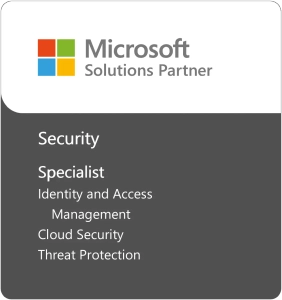
Through our Microsoft Security specializations, we’ve built expertise across:
- Identity & Access Management
- Threat Protection
- Cloud Security
Together, these specializations enable a more connected, strategic approach to cybersecurity.
Identity & Access Management
Microsoft’s Identity & Access Management specialization recognizes partners with proven expertise in deploying identity solutions built on Microsoft Entra ID and supporting Zero Trust security strategies.
This expertise helps organizations:
- Secure user identities across the organization
- Strengthen authentication and access controls
- Enable secure hybrid work environments
- Manage access for employees, partners, and external users
- Reduce the risk of identity-based attacks
As organizations continue adopting cloud-first strategies, strong identity controls provide the foundation for a resilient security posture.
Threat Protection
Security teams face a growing number of threats, alerts, and attack vectors every day.
The Microsoft Threat Protection specialization validates expertise in technologies like Microsoft Sentinel, Microsoft Defender for Identity, and Microsoft Defender for Cloud Apps.
This specialization supports organizations looking to:
- Detect threats earlier
- Improve security visibility
- Accelerate incident response
- Strengthen security operations
- Better protect critical systems and data
When threats are constantly evolving, having access to proven security expertise helps organizations respond with greater speed and confidence.
Cloud Security
Cloud adoption continues to accelerate, but so do cloud-based risks.
The Cloud Security specialization recognizes partners that demonstrate experience implementing security solutions across Microsoft Azure, hybrid, and multi-cloud environments.
Organizations benefit from guidance around:
- Securing cloud workloads
- Improving cloud governance
- Reducing security risks
- Protecting sensitive data
- Supporting secure cloud transformation
As businesses continue modernizing their infrastructure, cloud security remains a critical component of long-term success.
Why does having multiple security specializations matter?
While each specialization delivers value independently, the real advantage comes from bringing these capabilities together.
Cybersecurity challenges rarely fit into a single category. Identity, threat detection, cloud security, compliance, and governance all work together.
That’s why organizations increasingly benefit from partners that can provide expertise across multiple security disciplines.
The combined value includes:
- More holistic security strategies
- Better alignment between security technologies
- Reduced operational complexity
- Consistent implementation of Microsoft best practices
- Stronger support for Zero Trust initiatives
- Guidance that connects security objectives to business outcomes
Rather than addressing individual security challenges in isolation, organizations can take a more strategic and integrated approach.
What does this mean for organizations working with R3?
For clients, these specializations translate into practical business value.
- Access to validated expertise: Work with a team whose capabilities have been independently validated through Microsoft’s specialization requirements.
- Guidance across multiple security domains: Receive support that spans identity, threat protection, and cloud security rather than focusing on a single technology area.
- Alignment with Microsoft’s security vision: Implement solutions built around Microsoft’s latest security frameworks, technologies, and recommended practices.
- A commitment to continuous innovation: Partner with a team that continues investing in advanced certifications, specializations, and emerging security capabilities as the threat landscape evolves.
How is R3 continuing to invest in security excellence?
As organizations continue to embrace cloud technologies, AI innovation, and hybrid work, security strategies must evolve just as quickly.
Microsoft Security specializations provide a meaningful way to identify partners with validated expertise and a demonstrated commitment to customer success.
For R3, these credentials reflect our commitment to helping organizations build secure, resilient, and future-ready environments that support both protection and growth.
Whether you’re strengthening identity security, enhancing threat detection, or securing your cloud environment, R3 can help you navigate the security landscape with confidence.